While the AI conversation has focused on language models and software agents, a parallel transformation has been quietly accelerating on factory floors, warehouses, and data centers. This week, three converging announcements confirmed that Physical AI — the fusion of large foundation models with real-world robotic systems — has crossed the enterprise threshold.
This is not a roadmap. These robots are shipping.
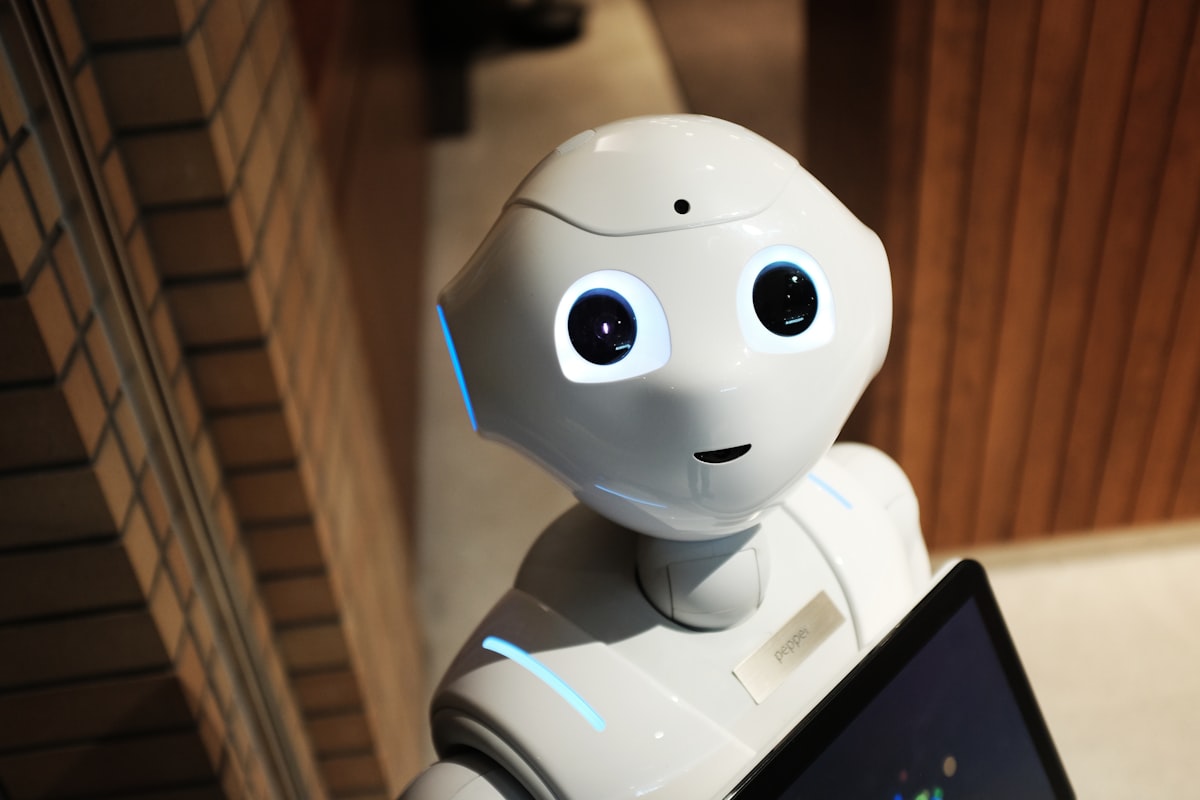
What Is Physical AI?
Physical AI refers to AI systems that perceive, reason, and act in the physical world — not just in text or code. Unlike software agents that automate digital workflows, physical AI systems operate robots, autonomous vehicles, warehouse machinery, and industrial equipment.
The critical development of 2026 is that the same foundation model breakthroughs powering large language models are now being applied to physical systems. The result: robots that can generalize across tasks, learn from limited real-world data, and work safely alongside humans — without needing millions of hours of physical training data.
NVIDIA Opens the Infrastructure Layer for Physical AI
On March 16, 2026, NVIDIA announced the Physical AI Data Factory Blueprint — an open reference architecture that automates how training data is generated, augmented, and validated for physical AI systems.
Training physical AI has historically been the bottleneck. Real-world data collection is expensive, dangerous, and slow. Edge cases — the rare scenarios where robots fail — are nearly impossible to gather at scale in the real world. The blueprint solves this with three core components built on NVIDIA’s Cosmos world foundation models:
- Cosmos Curator — processes and annotates raw sensor data (video, lidar, depth) at scale
- Cosmos Transfer — expands limited real datasets with synthetic variations, including rare edge cases that are impractical to capture physically
- Cosmos Evaluator — automatically scores model performance before deployment, reducing the risk of shipping undertrained systems
Microsoft Azure has already integrated the blueprint into an enterprise-grade open toolchain, combining it with Azure IoT Operations, Microsoft Foundry, and GitHub Copilot for end-to-end physical AI development. The blueprint became publicly available on GitHub in April 2026 — dramatically lowering the barrier for any engineering team to build physical AI products.
Salesforce Is Already Saving 40 Hours Per Week Per Site
The most concrete enterprise proof point: Salesforce is using Agentforce, Cosmos Reason, and the NVIDIA blueprint to analyze video footage from its security robots, cutting incident resolution time in half. That translates to 40 hours saved per week per location — with a projected 6,000 hours saved monthly across its global footprint.
Other early adopters include FieldAI, Skild AI, Uber, Hexagon Robotics, and Teradyne Robotics.
“The Physical AI Data Factory Blueprint reduces the costs, time, and complexity of training physical AI systems at scale.” — NVIDIA, March 2026
Google DeepMind Brings Gemini to the Factory Floor
On March 24, 2026, Google DeepMind and Agile Robots SE announced a strategic partnership to deploy Gemini Robotics foundation models across Agile’s globally installed base of 20,000 industrial robots.
The partnership is structured as an AI flywheel: Agile’s robots collect operational data in real factory environments, which feeds back to improve the Gemini models, which in turn expand robotic capability — unlocking progressively broader deployment at scale.
Target sectors for the collaboration include:
- Electronics manufacturing — precision assembly and real-time quality inspection
- Automotive — component handling and sub-assembly alongside human workers
- Data centers — cable management, hardware installation, and rack maintenance
- Logistics — order picking, sortation, and last-mile preparation
The centerpiece is the Agile ONE humanoid robot, entering series production in 2026. Designed to work closely alongside humans, the Agile ONE uses Gemini’s native multimodal reasoning to understand context, follow verbal and gestural instructions, and adapt to unstructured environments without rigid pre-programming.
As The Robot Report notes, this represents a shift from specialized robots trained for narrow tasks to general-purpose robotic workers that can be redeployed across different roles — the same paradigm shift that GPT-3 brought to software.
Amazon Crosses 1 Million Deployed Robots
Amazon recently crossed a milestone that illustrates how far physical AI has already scaled in enterprise logistics: 1 million deployed robots across its global fulfillment network. The fleet includes autonomous mobile robots (AMRs), AI-guided robotic arms for picking and packing, and intelligent conveyor systems.
What makes this milestone significant is not the count — it’s the integration depth. Amazon’s physical AI systems don’t operate in isolated cells. They work in coordination with human associates, sharing floor space and optimizing throughput via real-time AI orchestration while maintaining safety protocols.
This is the model the rest of enterprise logistics is racing to replicate.
Enterprise Adoption Is Accelerating Faster Than Expected
A Deloitte survey on Physical AI trends found that 58% of business leaders are already using physical AI in some form — for smart monitoring, production assistance, or human-robot collaborative tasks. That figure rises to 80% planning adoption within the next two years, with 15% reporting extensive current use and 3% fully integrated deployments.
The sectors moving fastest are warehousing and supply chain — driven by labor market pressure and proven ROI — followed by manufacturing, security, and data center operations.
As Manufacturing Dive reported in 2026, the question has shifted from “should we adopt physical AI?” to “how fast can we scale it?”
The pattern mirrors software AI adoption: a gradual ramp, then an inflection point where the technology becomes too capable and cost-effective to ignore.
What This Means for Your Business
Physical AI extends software automation into the physical world. For most organizations, the near-term opportunities are concrete and measurable:
- Warehousing and fulfillment — partially automate picking and sortation with AMR systems trained on NVIDIA-compatible blueprints, without replacing existing infrastructure
- Manufacturing quality control — deploy vision AI arms for real-time defect detection alongside existing lines, reducing reject rates and manual inspection costs
- Data center operations — use humanoid robots for cable management and hardware swaps, reducing downtime from human error
- Security and facilities management — deploy AI-vision robots (as Salesforce does) to reduce manual patrol time by 40+ hours per week per site
The critical insight: physical AI amplifies human teams, it does not eliminate them. Every major deployment — Amazon, Salesforce, Agile Robots’ 20,000+ units — is structured around human-robot collaboration, not replacement. The business case is labor force augmentation in roles with high repetition, high risk, or chronic staffing shortages.
How AgentsGT Connects Physical and Digital AI
Physical AI systems generate enormous volumes of operational data — sensor readings, video feeds, anomaly logs, maintenance events, throughput metrics. That data only becomes actionable when it flows into intelligent digital workflows.
AgentsGT provides the agent layer that bridges physical AI deployments with business systems. Whether your team needs to:
- Automatically trigger maintenance tickets when a robot detects an anomaly
- Route vision AI alerts to the correct human operator or supervisor
- Synthesize data from multiple robot systems into executive dashboards
- Connect robotic systems to your ERP, WMS, or CRM via MCP-compatible integrations
AgentsGT gives your team the workflow intelligence to make physical AI data actionable — without building custom integrations from scratch for every system.
As NVIDIA’s Physical AI Data Factory becomes broadly available and Gemini Robotics scales across 20,000+ deployed industrial units, the organizations that have connected digital agent workflows in place will capture disproportionate value from their physical AI investments.
Ready to Plan Your Physical AI Strategy?
The transition from pilot to production is where most organizations stall. If you’re evaluating how physical AI fits your operations — or how to connect robot deployments to your existing business systems — the DDR Innova team can help you build a practical, executable roadmap.
- Book a strategy call at ddrinnova.com
- Or write to us at info@ddrinnova.com
We work with teams across manufacturing, logistics, and services to design AI systems that deliver measurable results — starting with what’s deployable today, not next year.
Sources: NVIDIA Newsroom · TechCrunch · Deloitte Insights · StartupHub AI · Manufacturing Dive · The Robot Report · Agile Robots
Frequently Asked Questions
What is Physical AI?
Physical AI refers to artificial intelligence systems that operate in the physical world through robots, drones, and autonomous machines, combining perception, reasoning, and action in real environments.
How many robots has Amazon deployed?
Amazon has deployed over one million robots across its fulfillment network, making it the largest commercial robotics deployment in history as of 2026.