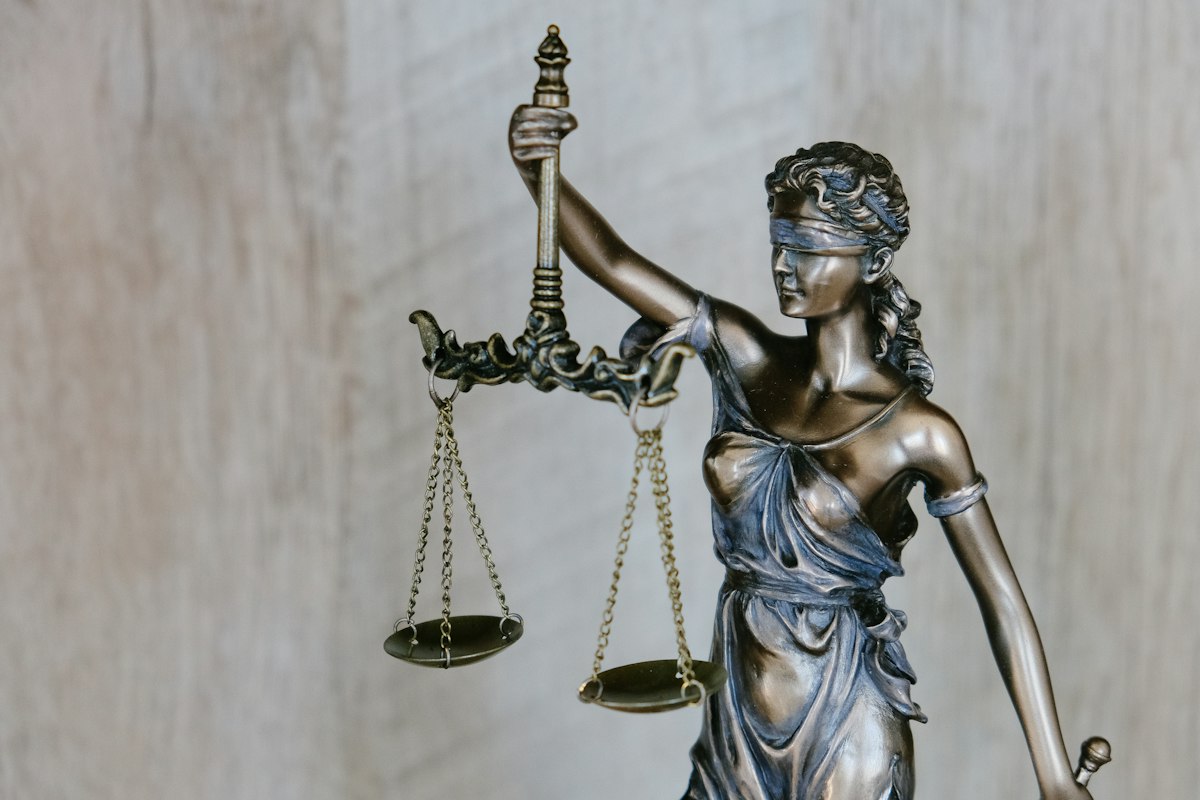
The most consequential AI courtroom battle of the decade is live. As of April 29, 2026, Elon Musk’s lawsuit against OpenAI, CEO Sam Altman, and President Greg Brockman has entered Day 3 in Oakland, California — with Musk set to retake the stand and over $134 billion in potential damages, the reversal of OpenAI’s for-profit conversion, and the company’s planned trillion-dollar IPO all hanging in the balance. The Musk OpenAI trial is not just a personal dispute between two of tech’s biggest egos. It is a case that could rewrite the legal rules governing how AI companies are allowed to grow, profit, and govern themselves — and send shockwaves through every startup that has ever used a nonprofit structure to attract talent or donors before pivoting to commercial scale.
What’s At Stake: $134 Billion, a Trillion-Dollar IPO, and a Precedent for Every AI Company
The headline number is $134 billion — but it is important to understand what Musk is actually asking for. He is not seeking that money for himself. The lawsuit demands that damages be directed to OpenAI’s nonprofit arm, restoring what Musk claims was stolen from the charitable mission that originally justified the company’s existence. He also wants the court to force the removal of Altman and Brockman and to unwind OpenAI’s conversion from nonprofit to for-profit public benefit corporation.
The timing could not be more pointed. The trial arrives just weeks before OpenAI’s anticipated initial public offering at a valuation widely estimated around $1 trillion — which would make it one of the largest IPOs in US history. Legal observers note that a ruling against OpenAI could block or materially delay that offering, since an unwound corporate structure creates obvious complications for public investors.
But the case’s real long-term significance may be precedential. A coalition called Eyes on OpenAI — comprising more than 60 California nonprofits — has separately filed arguments claiming OpenAI’s restructuring is “full of holes” and that approving it would give any startup a legal roadmap to exploit charitable tax protections and talent goodwill, then pivot to commercial extraction once the hard work of early R&D is complete. The California Attorney General is also monitoring the proceedings.
The stakes, in other words, extend well beyond one company’s boardroom. Every AI organization that has used a mission-driven nonprofit structure — and there are many — is watching closely.
OpenAI’s Founding Promise — and How It Unraveled
To understand what is being litigated, you need the founding story, because that story is now contested territory under oath.
In 2015, Musk co-founded OpenAI with Altman, Brockman, Ilya Sutskever, and a small group of researchers. The stated mission was explicit: develop artificial general intelligence that is safe and beneficial to all of humanity, housed in a nonprofit so that no single commercial interest could weaponize the technology. Musk has testified that he was specifically motivated by concern that Google was not taking AI safety seriously and that a well-funded nonprofit could function as a “counterweight” to the search giant’s unchecked AI ambitions.
Musk provided what he estimates as over $44 million in early funding and, by his own account in Tuesday’s testimony, was responsible for the idea, the name, many of the key hires, and much of the organization’s early intellectual direction. He departed in 2018 after what multiple sources describe as an acrimonious internal power struggle, reportedly after his push to take operational control of the organization was rejected by the board.
What followed his exit is the heart of the lawsuit. In 2019, OpenAI restructured into a “capped-profit” hybrid — a legal construct allowing investors to receive returns capped at 100x their investment, with the nonprofit nominally remaining the controlling entity. By 2024 and into 2025, the company was pushing to remove that cap entirely and convert to a standard for-profit public benefit corporation, enabling a conventional IPO and uncapped shareholder returns.
OpenAI secured $122 billion in a funding round in early 2026, cementing its commercial ambitions — and making Musk’s lawsuit, which had been working through pretrial motions for months, feel newly urgent. Then, just weeks before trial, OpenAI rewrote its partnership with Microsoft in ways that further separated the for-profit arm from any meaningful nonprofit oversight. Each move tightened Musk’s core argument: that the nonprofit mission was being systematically hollowed out.
Three Days in Court: What the Trial Has Shown So Far
The trial opened Monday, April 28, with jury selection revealing just how polarized public opinion on Musk has become — several prospective jurors were dismissed after expressing strong views about him personally, underscoring how difficult it will be to find a panel that can evaluate the legal merits without bias in either direction.
Opening statements followed, and both sides framed their narratives sharply. Musk’s attorneys characterized OpenAI’s evolution as a deliberate betrayal of a charitable trust — a company that took the goodwill, tax exemptions, and talent pipeline that come with nonprofit status, then quietly engineered a conversion to capture the upside for insiders. OpenAI’s defense argued the opposite: that the structural evolution was a necessary adaptation to the capital-intensive realities of frontier AI development, and that Musk’s lawsuit is driven by “jealousy and regret” — specifically, regret that he left OpenAI before it became extraordinarily valuable.
On Day 2, Musk took the stand for nearly two hours. He appeared relaxed and methodical, taking credit for OpenAI’s founding vision and insisting that the nonprofit structure was never meant to be temporary scaffolding for a commercial enterprise. He said he was “open to the idea of establishing a small for-profit subsidiary” at the time — but explicitly opposed the scenario where “the for-profit takes the vast majority of the value away from the charity.” That framing is now central to his legal theory.
Day 3, unfolding today, has Musk returning for further cross-examination, followed by testimony from Jared Birchall, who manages Musk’s family office and serves as an executive at both xAI and Neuralink. Birchall’s testimony is expected to address the internal communications and financial arrangements from OpenAI’s early years.
Trial Timeline
2015
OpenAI founded as a nonprofit. Musk co-founds and funds with $44M+.
2017
Brockman diary entry — later cited as evidence — calls nonprofit commitment "a lie."
2018
Musk departs after internal power struggle. Altman takes the helm.
2019
OpenAI converts to "capped-profit" structure. Returns capped at 100x for investors.
2025–2026
OpenAI pursues full for-profit conversion. $122B funding round. Microsoft deal restructured.
Apr 28, 2026
Trial opens in Oakland. Jury selection + opening statements. Musk testifies Day 2.
Apr 29, 2026 — Today
Day 3: Musk cross-examined. Birchall testimony. Verdict could take weeks.
The Evidence: A Diary Entry and the Weight of the Founding Documents
Legal analysts watching the trial have focused on two categories of evidence as potentially decisive.
The first is Greg Brockman’s 2017 diary entry. According to plaintiff attorneys, this internal document — written two years after OpenAI’s founding — contains language calling the nonprofit commitment “a lie.” If authenticated and admitted into evidence, this single exhibit could prove exceptionally damaging: it suggests that at least one of OpenAI’s senior leaders privately acknowledged the nonprofit framing was never meant to be permanent, even while the company was publicly presenting it as a genuine constraint.
The second category is OpenAI’s own founding documents. OpenAI’s original charter and public statements repeatedly describe an unambiguous charitable mission — language that Musk’s attorneys argue created a legally enforceable “charitable trust” under California law. The core legal theory rests on two claims: breach of charitable trust (the nonprofit’s assets were diverted away from the stated mission) and unjust enrichment (insiders captured value that was supposed to belong to the public benefit mission). Courts evaluating charitable trust claims focus on outcomes, not intent — meaning even if Altman and Brockman genuinely believed the conversion was necessary and beneficial, the legal question is whether the result enriched private parties at the expense of the charitable purpose.
OpenAI’s defense has pushed back vigorously, arguing that the capped-profit structure and subsequent evolution were both disclosed and necessary — that without the ability to attract commercial investment, OpenAI could not have competed with Google, Meta, and others at the frontier. They characterize Musk’s lawsuit as a retaliatory effort by someone who “regrets leaving” and now wants to use the courts to damage a competitor, given that Musk subsequently founded xAI, a direct rival.
What This Means for Businesses Building on AI
For companies currently integrating AI into their operations — whether through OpenAI’s APIs, ChatGPT Enterprise, or the broader ecosystem of tools built on GPT models — the immediate message is: nothing stops today. OpenAI’s products, contracts, and technical operations are not affected by the trial’s proceedings.
But strategic planners should be paying close attention to the longer arc. If the trial results in a ruling that reverses or constrains OpenAI’s for-profit conversion, the downstream effects could include:
- IPO delay or cancellation. A $1 trillion IPO requires clean corporate structure. Legal uncertainty about whether the for-profit entity is legitimately constituted is material information for prospective investors.
- Microsoft Azure partnership disruption. OpenAI’s restructured deal with Microsoft is built on the assumption of a commercial entity. Any reversal complicates the $250 billion compute commitment and the joint Bedrock agent services that AWS just rolled out.
- Vendor concentration risk. If you have built your AI stack deeply around OpenAI, this is a moment to audit your exposure. Not because OpenAI is going away, but because any legal or structural uncertainty at the vendor layer is risk that your architecture should account for.
At AgentsGT, we track exactly these kinds of structural shifts — including the emergence of agentic AI tools that don’t depend on any single provider’s legal status. The lesson from the Musk v. Altman trial for enterprise AI buyers is the same lesson that cloud-native architecture taught a decade ago: provider diversification is not paranoia — it is engineering discipline.
What Comes Next
The trial is expected to run several weeks. After Musk’s cross-examination concludes on Day 3, the plaintiff’s case will continue with witnesses including current and former OpenAI employees, board members, and financial experts who will testify about the value that flowed from the nonprofit to the for-profit structure.
OpenAI will then present its defense, which is expected to center on the necessity argument — that the capital requirements of competing at the AI frontier simply could not be met within a nonprofit structure — and on challenging the characterization of the founding documents as creating an enforceable charitable trust under California law.
The California Attorney General, who has independent oversight authority over nonprofits in the state, has been watching the case and could seek to intervene or file its own claims depending on the trial’s trajectory. Separately, the Securities and Exchange Commission may scrutinize whether OpenAI’s disclosures to investors in its $122 billion funding round were materially complete given the pending litigation.
The verdict will not arrive quickly. But when it does, it will land on an industry that is still defining its fundamental rules — and the ruling could set those rules for a generation.
Cover photo by Tingey Injury Law Firm on Unsplash.
Sources
Frequently Asked Questions
What is the Musk v. Altman OpenAI trial about?
Elon Musk is suing OpenAI, CEO Sam Altman, and President Greg Brockman, claiming they betrayed OpenAI's original nonprofit mission by converting it to a for-profit structure. Musk is seeking over $134 billion in damages directed to OpenAI's nonprofit arm, plus the removal of Altman and Brockman from leadership.
What could happen if Musk wins the OpenAI trial?
A ruling in Musk's favor could force OpenAI to reverse its for-profit conversion, potentially blocking or significantly delaying its planned ~$1 trillion IPO. It would also set a legal precedent making it harder for AI startups to use nonprofit status as a launchpad for full commercial extraction.
What is the key evidence in the OpenAI trial?
One of the most damaging exhibits is a 2017 diary entry by OpenAI President Greg Brockman allegedly calling the nonprofit commitment 'a lie.' Plaintiff attorneys are also relying on OpenAI's original founding documents, which describe the mission in unambiguously charitable terms.
Does the OpenAI trial affect companies using ChatGPT or the OpenAI API?
OpenAI's products continue operating normally regardless of the trial's progress. However, a ruling against OpenAI could affect its IPO timeline and long-term structure, with knock-on effects for its $250 billion Azure partnership with Microsoft. Businesses with deep OpenAI dependencies should track the outcome closely.